

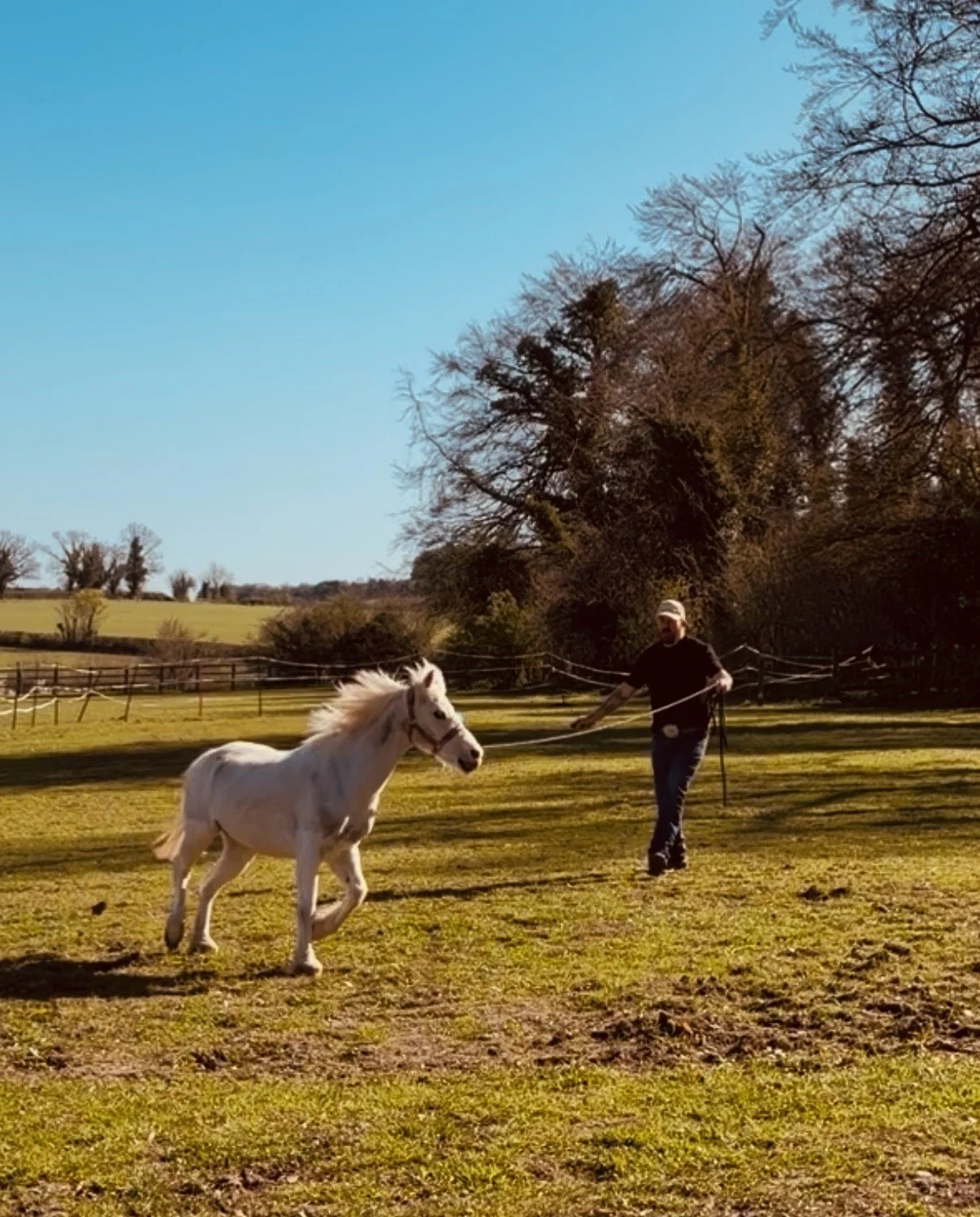
I didn’t start with softness, I started wanting results. But horses don’t respond to force for long. They made me realise it wasn’t about control, it was about understanding.
Natural horsemanship, to me, is earning a horse’s trust. It’s in the quiet moments when they choose to be with you, not because they have to, but because they want to.
Less force.
More feel.
Real connection.
That’s what I’m chasing.
It’s in the quiet moments I’ve learned the most. A horse choosing to stay with you loose in a field. Dropping its head. Softening its eye. Walking beside you without being asked twice. Those things don’t come from pressure they come from trust.
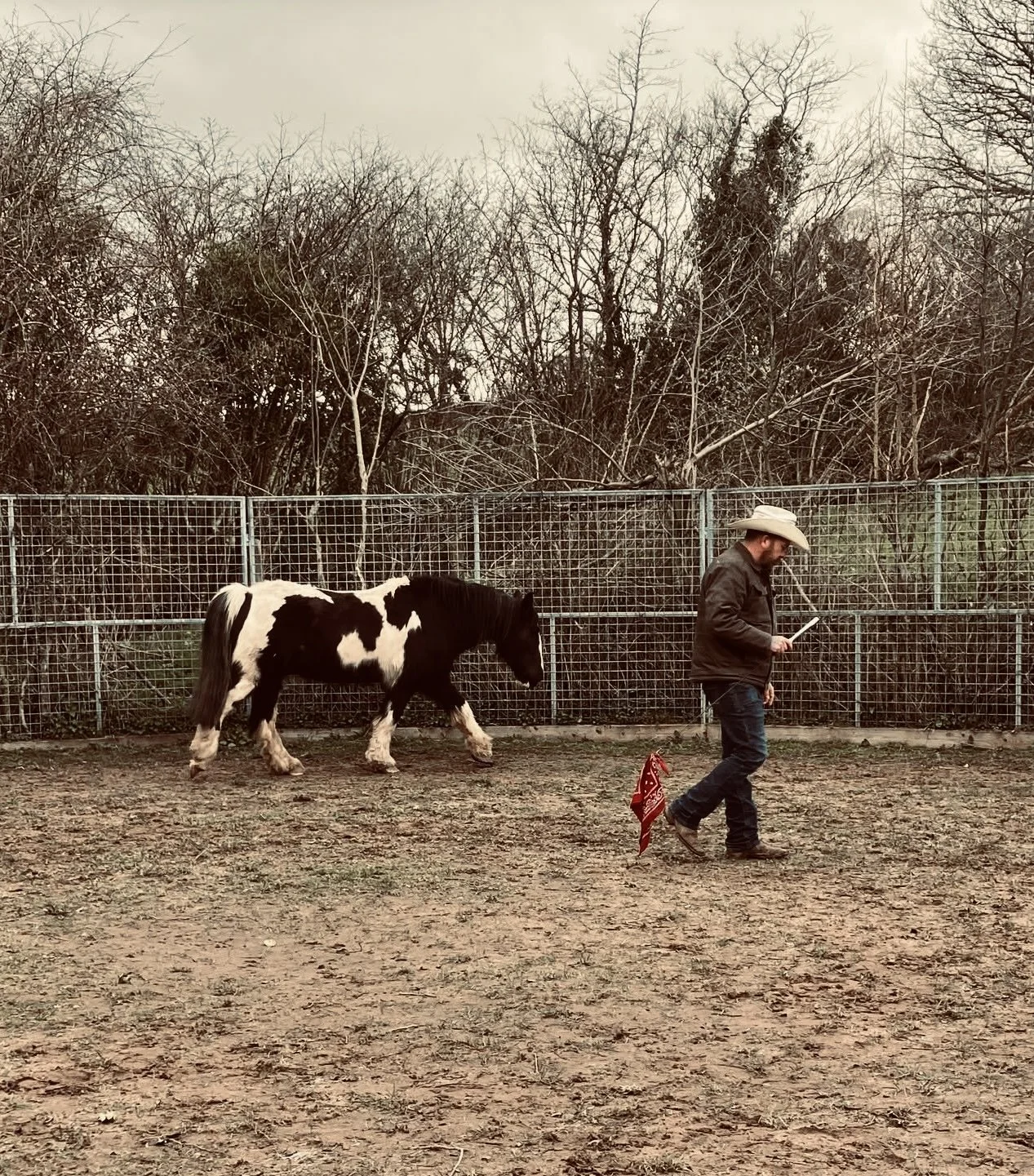
The Quiet Power of Natural Horsemanship
There’s something deeply humbling about standing next to a horse. At over half a ton of muscle, instinct, and awareness, they could overpower us without effort yet, time and again, they choose not to. Natural horsemanship is about understanding why.
At its core, natural horsemanship isn’t a technique or a trend. It’s a mindset. It asks us to step out of force, dominance, and shortcuts, and instead step into communication, trust, and awareness. It’s less about controlling a horse and more about becoming someone a horse is willing to follow.
Listening Before Asking
Most people approach horses with a plan, what they want the horse to do, how they want it done, and how quickly they expect results. Natural horsemanship flips that on its head. It starts with observation.
A flick of the ear. A shift in weight. A tightening around the eye. These are not random movements; they’re language. Horses are constantly communicating, and when we slow down enough to notice, we realize they’ve been speaking all along. The real question becomes: are we listening?
Pressure and Release: The Simplest Conversation
One of the foundational ideas in natural horsemanship is pressure and release. It’s not about forcing movement, it’s about suggesting it.
You apply the lightest possible pressure, whether that’s a shift in energy, a feel on the rope, or a touch. The moment the horse responds even slightly you release. That release is the reward. It tells the horse, “Yes, that’s what I was asking.”
Done correctly, it becomes a conversation rather than a command. Done poorly, it becomes noise. The difference lies in timing, feel, and intention things that can’t be rushed or faked.
Leadership Without Fear
In a herd, horses don’t follow the strongest they follow the most consistent. Leadership is earned through clarity, fairness, and calm energy. Natural horsemanship asks us to become that kind of leader.
Not loud. Not aggressive. Not unpredictable. Just clear.
A horse doesn’t need you to be perfect, but it does need you to be understandable. When your cues are consistent and your reactions are fair, the horse begins to relax. And when a horse relaxes, it learns.
The Inner Work
Here’s the part many people don’t expect: natural horsemanship is as much about training yourself as it is about training your horse. Horses reflect what we bring into the arena. If you’re frustrated, they’ll feel it. If you’re distracted, they’ll notice. If you’re calm and present, they’ll meet you there.
You can’t fake authenticity with a horse. That’s why so many people find the process transformative it demands honesty.
It’s Not Always Pretty
There’s a misconception that natural horsemanship is soft or easy. It isn’t. It takes patience when things aren’t progressing. It takes discipline to stay consistent. And it takes humility to admit when you’re the one who needs to change. There are no shortcuts here only progress built over time.
Why It Matters
In a world that often values speed and results above all else, natural horsemanship offers something different. It reminds us that relationships real ones can’t be rushed.
When you build a connection with a horse based on trust rather than force, everything changes. Movements become lighter. Communication becomes quieter. And the partnership becomes something far deeper than obedience.
It becomes mutual.
“Work with the horse, not against it.”